A travel capsule wardrobe is a small set of clothes you can wear in several combinations throughout a trip. For a 10-day carry-on plan, try the 5-4-3-2-1 method: five tops, four bottoms, three dress-and-shoe choices, two layers, and one accessory bundle. That is 15 packing slots; the last slot is a group of small extras rather than one garment. Choose pieces that suit your itinerary and can be reworn or washed. A compact capsule can offer 15 or more outfits, but the bag it fits in depends on fabric bulk, other belongings, and your airline’s rules.
The 5-4-3-2-1 plan: 5 tops + 4 bottoms + 2 pairs of shoes and 1 dress + 2 layers + 1 accessory bundle. Start with one coordinating color base, then add a color you enjoy. The goal is enough useful combinations for your trip, not a fixed fashion rule.
The 5-4-3-2-1 Packing Method Explained
Start with five tops you would wear with at least two of your four bottoms. Put two shoes and one dress in the group of three; wear the bulkier shoe in transit if it is comfortable. Add two layers for the temperature changes you expect and one accessory bundle for a small bag, a foldable tote, and a few accessories you actually use. Underwear, sleepwear, swimwear, and weather-specific gear sit outside this outfit formula; leave room for them before deciding your suitcase is full.
A shared color base makes the choices easier. An ivory shirt, navy tee, and olive knit can each work with dark jeans or light trousers; a skirt or shorts can cover warmer days. You do not have to use neutrals exclusively. Lay the actual garments together in daylight, then keep combinations you like and can move in. For a broader closet framework, see how to build a capsule wardrobe. Travel Fashion Girl’s packing-list approach also separates core clothing from shoes and outerwear, which is useful when adapting the count to a destination.
Before packing, check your airline’s cabin-bag size and weight allowance, including any connection. IATA explains that carry-on allowances vary by airline, cabin class, and aircraft; a bag described as a “22-inch carry-on” is not automatically accepted everywhere. Measure the outside of your bag with its wheels and handles, then reserve space for toiletries and non-clothing essentials.
Fabric Strategy: What Actually Survives the Suitcase
Fabric wrinkle resistance depends on fiber, knit or weave, finishing, and how tightly the bag is packed. A fine merino knit can be a useful repeat-wear top or layer: Woolmark describes merino’s wrinkle recovery, breathability, and odor resistance. A dense cotton jersey tee often travels more easily than a crisp cotton shirt, though you should test the piece you own. Lyocell can feel soft and drape well, but the care label and fabric construction matter more than a fiber name alone.
Pack a satin or silk top only if you are comfortable with its care needs and the possibility of creasing. A heavy linen piece may look relaxed rather than pressed after a flight; lightweight linen blends may be easier for your plans. Thin rayon or viscose and rigid denim can also crease or take up space, depending on the garment. Fold each candidate into your bag for an hour at home, then see whether the result works for the occasions on your itinerary.
The 10-Day Carry-On Packing Checklist
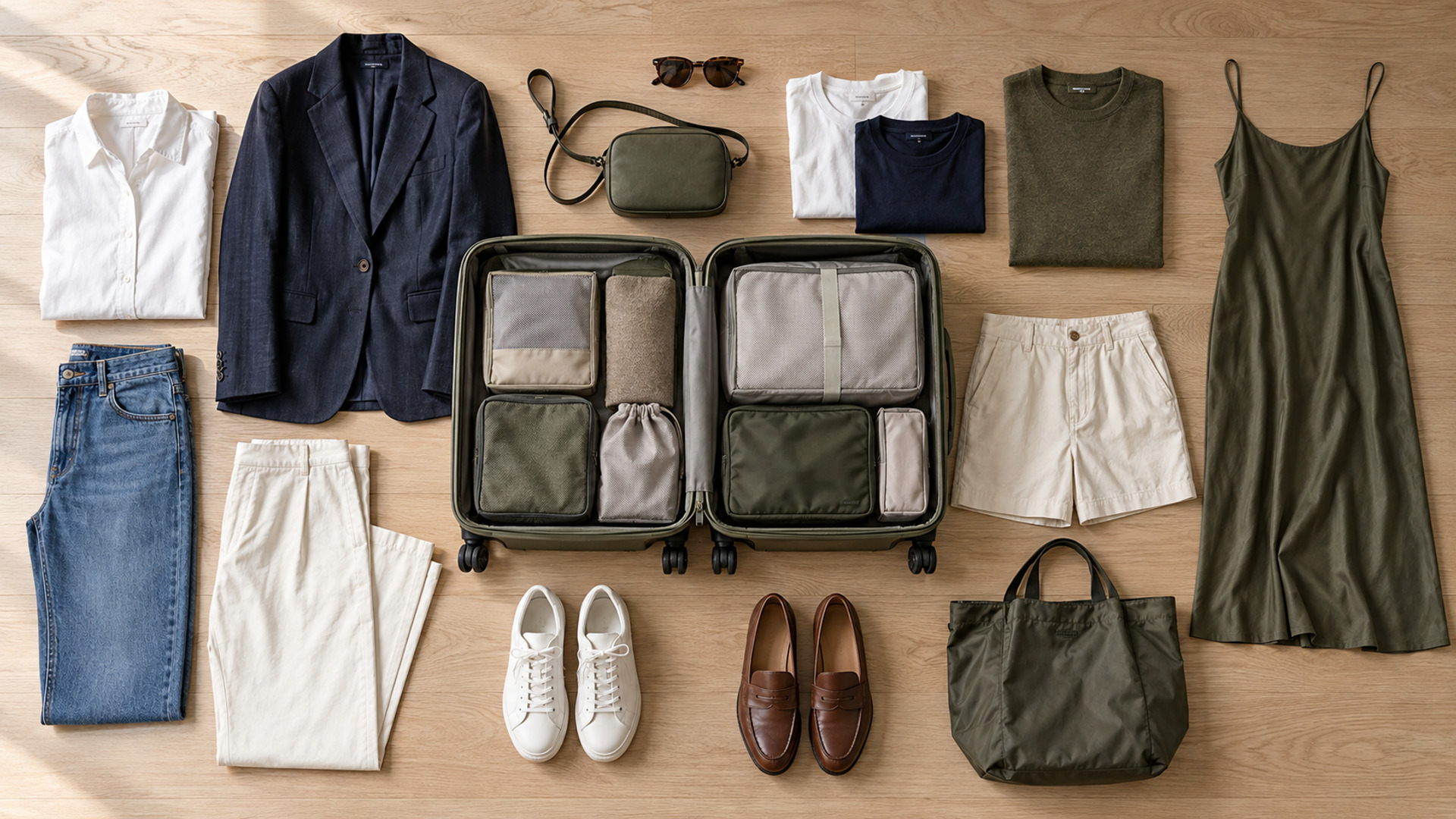
This sample is for mixed sightseeing and casual dinners in mild weather. Swap the dress, skirt, shorts, or blazer for garments that suit your climate, dress codes, mobility, and preferences. The image shows the coordination idea, not an exact inventory of every item below.
| Packing slot | Count | Sample for 10 days |
|---|---|---|
| Tops | 5 | 2 cotton tees (ivory and navy); 1 Oxford shirt; 1 dressier satin or silk-blend top; 1 fine merino knit |
| Bottoms | 4 | 1 comfortable straight trouser; 1 pair of jeans; 1 midi skirt; 1 pair of shorts or lightweight trousers |
| Dress and shoes | 3 | 1 versatile slip or shirt dress; 1 comfortable walking sneaker; 1 loafer or sandal suitable for your plans |
| Layers | 2 | 1 blazer or cardigan; 1 light jacket or rain-ready outer layer suited to the forecast |
| Accessory bundle | 1 | 1 crossbody bag, 1 foldable tote, and a few small extras such as sunglasses, a belt, or earrings |
| Total | 15 slots | Fourteen clothing and shoe entries, plus one accessory bundle |
A simple 10-day outfit matrix
| Days | Outfit base | Change that adds range |
|---|---|---|
| 1–2 | Tee + straight trousers | Oxford shirt open as a layer; switch to loafers for dinner |
| 3–4 | Tee + jeans | Fine knit for a cooler morning; change the bag or shoes |
| 5–6 | Dress | Sneakers for walking; blazer and loafers later |
| 7–8 | Satin top + midi skirt | Add the light jacket outdoors; use the Oxford shirt for a casual version |
| 9–10 | Oxford shirt + shorts or light trousers | Roll sleeves or add the knit as weather changes |
That is a planning matrix, not a guarantee of ten unique outfits or a requirement to avoid repeats. Five tops and four bottoms give 20 possible top-and-bottom pairings on paper. Some will be wrong for the weather or your taste; test at least 15 combinations you would actually wear, including the dress and layer changes. Plan laundry or a refresh for garments you expect to rewear. Put dense items at the bottom of the case, use packing cubes to keep categories visible, and leave the most crease-prone piece with room to breathe.
Day-to-Night Transition Formulas
Keep the base, then change the items that affect the occasion. For sightseeing, try a silky midi skirt with an ivory top, white walking sneakers, an open chambray or Oxford shirt, and a small crossbody. For dinner, keep the skirt and top, then use loafers or low mules, a blazer, and earrings. The shoes and layer do most of the work; you do not need a second full outfit.
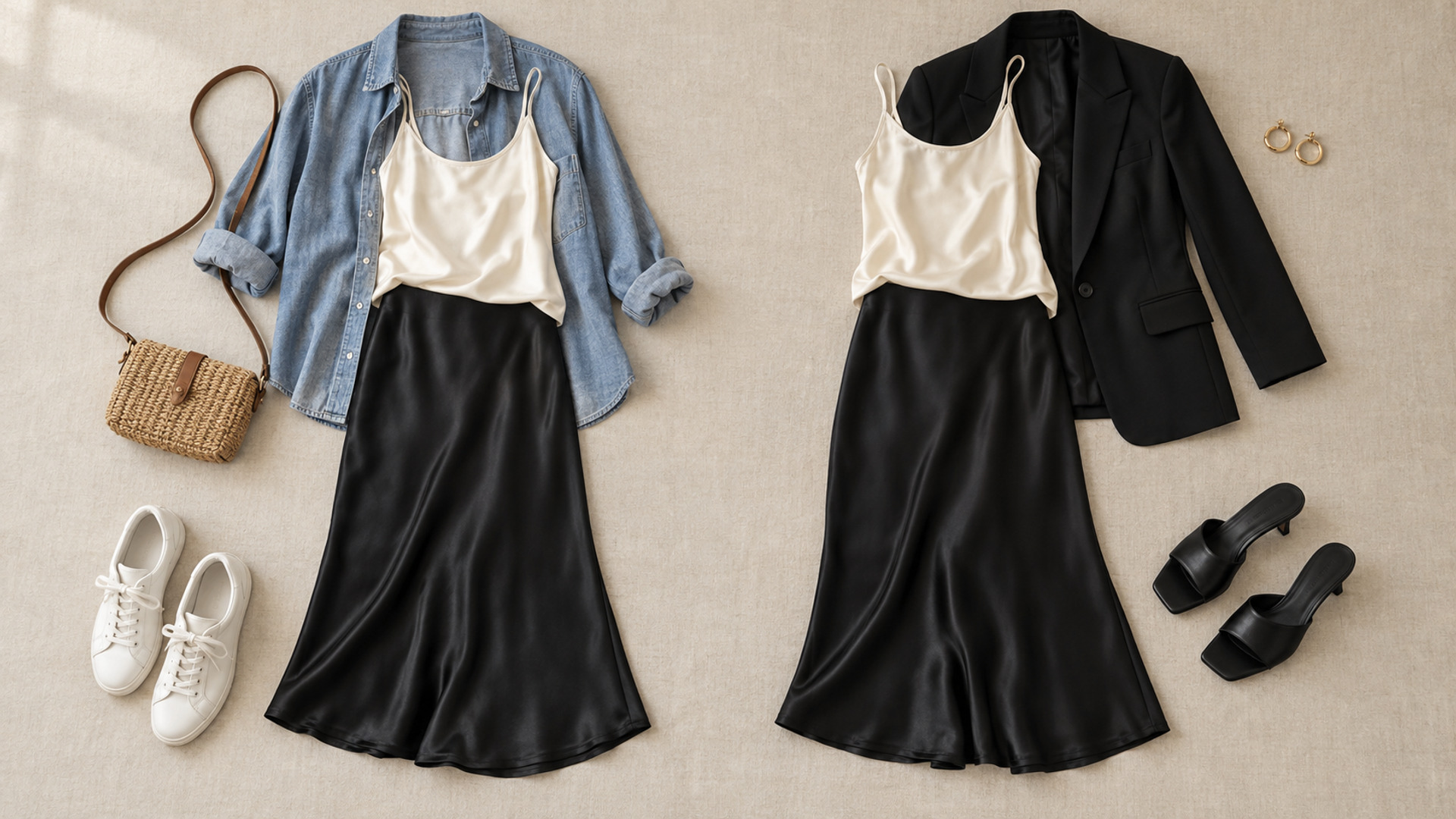
An Oxford shirt can also work buttoned with trousers, open over a tee, or as a coverup when its fabric and your setting make that comfortable. A restaurant or theater may have its own dress expectations, so check before relying on one look. If color coordination is the sticking point, use how to match clothing colors to test a few combinations at home.
Frequently Asked Questions
How do I pack for a 2-week trip with only a carry-on?
Use the same small wardrobe if it suits the weather and arrange a laundry stop around day six or seven. Two weeks are manageable when you are willing to repeat and wash pieces; you do not need 14 different tops. Leave space for personal essentials and check the airline allowance before departure.
What is the heaviest outfit rule for flying?
Wear the bulky pieces you would otherwise pack, such as your heavier shoes, jeans, or blazer, if they are comfortable for the journey. It frees some bag space, but there is no reliable percentage that applies to every suitcase. Keep safety and comfort in mind when choosing footwear for long travel days.
How can I prevent clothes from wrinkling in luggage?
Roll soft knits or fold them into a packing cube without overcompressing. Fold structured garments along their seams and place a delicate top near the top of the bag. Compression cubes organize space, but tight compression can make creases worse. Check the garment’s care label before steaming or ironing it at your destination.
Related Wardrobe Guides
Start with how to build a capsule wardrobe for the larger closet method, then use the wardrobe essentials checklist to evaluate the pieces you already own. How to match clothing colors helps you make the travel palette work. If you would like a more personal route later, the Outfit Test preview describes the planned photo-and-questionnaire experience.