Wardrobe essentials are clothes you can reach for repeatedly and combine with much of what you already own. This 25-piece checklist is a starting library, not a shopping order: a white Oxford shirt, straight-leg jeans, a gray knit, a wool blazer, a sand trench, loafers, and sneakers are among its useful anchors. Choose the versions that fit your schedule, climate, comfort, and taste.
A foundation, not a uniform: Six tops + five bottoms + four outer layers + two dresses + five pairs of shoes + three accessories = 25 possible staples. You may already own many of them. A piece earns its place when it works with your actual wardrobe and gets worn.
The 3-Year Test: What Separates a Staple from a Passing Trend
Before buying a classic wardrobe staple, ask three questions: Would I have liked its shape three years ago? Can I make at least three outfits with it today? Can I imagine wearing it for another three years, given my routine? The test is a way to check your own repeat use, not a prediction that fashion will stand still. A straight jean or simple shirt may pass for one person, while a bright dress or unusual jacket may be another person’s most reliable piece. Vogue’s wardrobe essentials edit likewise treats staples as a flexible starting point that differs by person.
Cost per wear is the price paid divided by the number of times you actually wear the item. A $250 blazer worn 150 times costs about $1.67 per wear; a $40 blouse worn twice costs $20 per wear. Those are examples, not price recommendations or guarantees of durability. Estimate realistic wears, add expected cleaning or repair costs if they matter, and compare pieces that meet the same need. A less expensive jacket you wear often can be the better choice.
The 25 Non-Negotiable Closet Staples
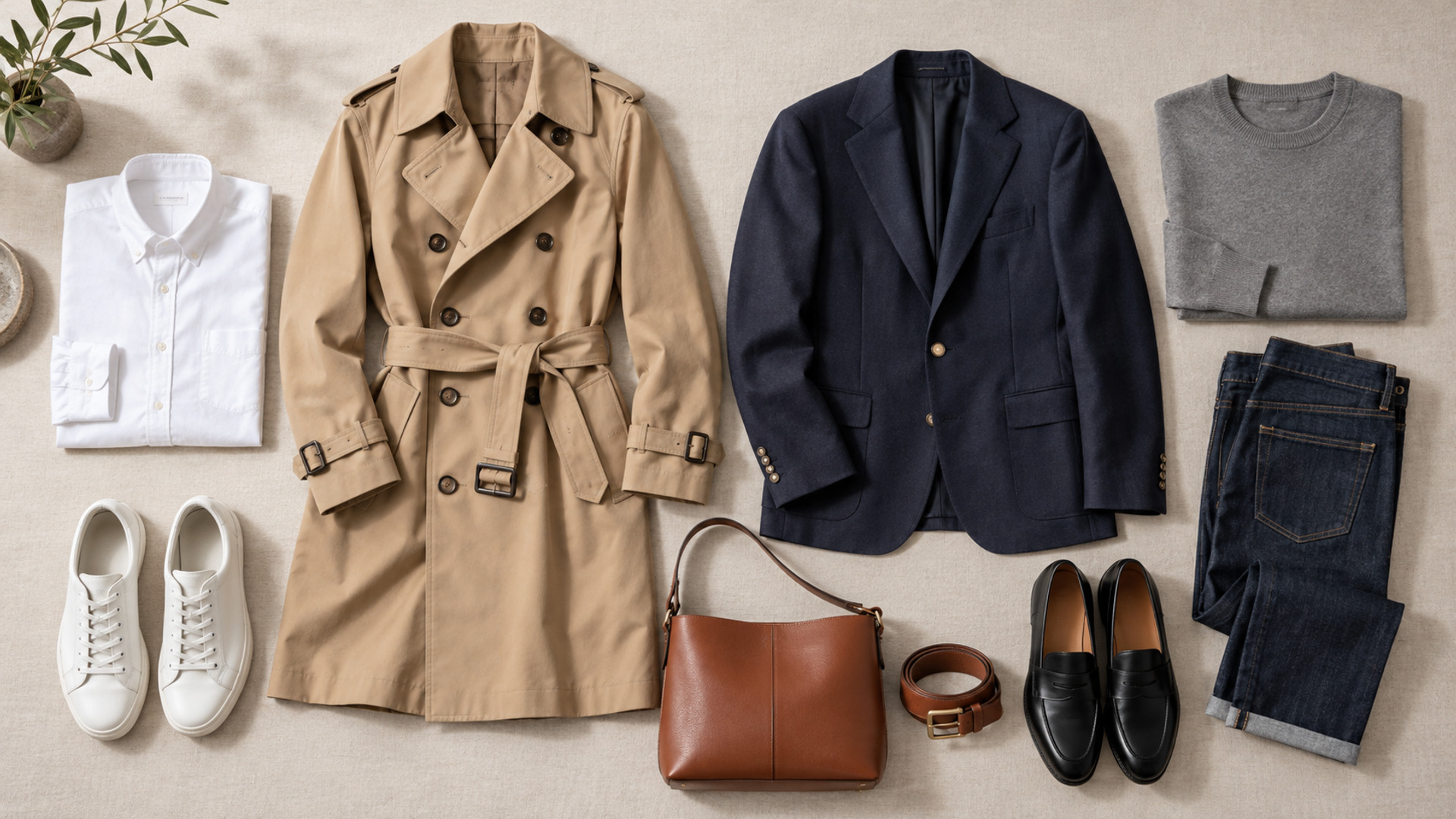
Treat “non-negotiable” as a checklist title, not a rule. Keep, swap, or skip any slot that does not fit your life. The suggested colors make combinations easy to visualize; your own dependable colors may be different.
Tops — 6 pieces
- Opaque white crewneck T-shirt. Look for a neckline that sits comfortably and a hem you can tuck or leave loose; check opacity in daylight.
- Black T-shirt. Try the same easy shoulder and sleeve fit in a darker option for high-contrast outfits.
- White Oxford shirt. A straight, relaxed cut leaves room to move and layer; check that the buttons do not pull across the chest or hips.
- Breton-striped top. A clear stripe adds pattern while keeping the shape as easy to wear as a plain knit.
- Gray cashmere sweater. Choose a crewneck with room over a shirt; merino or another knit you enjoy can fill the same slot.
- Ivory silk camisole. Look for adjustable straps and an easy drape under a jacket; a washable alternative may suit your care routine better.
Bottoms — 5 pieces
- Dark straight-leg jeans. Try a mid or high rise that stays comfortable when seated, with a hem that works with your usual shoes.
- Light straight-leg jeans. Keep the same wearable line in a lighter wash for a different visual weight.
- Pleated wool trousers. Check that the pleats fall smoothly while standing and sitting; leave enough length for the shoes you wear most.
- Black cropped tailored trousers. A slim straight or cigarette cut gives a clean ankle line without pulling at the calf.
- Midi skirt. Choose substantial wool or fluid satin, then test the waistband and walking ease rather than relying on the hanger view.
Outerwear and layers — 4 pieces
- Sand double-breasted trench. Try a below-knee length over your bulkiest regular layer and check that the belt and sleeves move comfortably.
- Structured wool blazer. A relaxed tailored shape should close without strain and let you reach forward; a navy or charcoal version can bridge jeans and trousers.
- Leather biker jacket or bomber. Choose the cut that suits your outfits and climate; check zip movement and sleeve length over a knit.
- Long wool coat. A maxi-length coat can cover longer layers; leave walking room and check its weight on your shoulders.
Dresses — 2 pieces
- Simple black dress. Pick a neckline and shape you can wear with flats as well as dressier shoes; the useful version is the one you reach for.
- Everyday knit or shirt dress. Look for a comfortable range of movement and a fabric weight that suits your season.
Footwear — 5 pairs
- Minimal white leather sneakers. Check support, grip, and how the toe box feels after walking.
- Black leather loafers. A restrained gold buckle can add detail; the heel should stay secure without rubbing.
- Black or beige pumps. Choose a heel height and toe shape you can comfortably wear for the occasions on your calendar.
- Chelsea ankle boots. Check that the shaft works with your trouser hems and the soles suit your weather.
- Dressy flat sandals. Secure straps and a flexible sole make them easier to use beyond a single event.
Accessories — 3 pieces
- Leather tote. Test the weight, handle drop, and whether it carries what you actually bring each day.
- Structured crossbody bag. A smaller hands-free option can shift the same outfit from work to a weekend errand.
- Medium-width leather belt. Match its length and buckle scale to the jeans, trousers, or dress you plan to wear it with.
These pieces are closet staples, not a fixed 25-item capsule. A capsule wardrobe is a smaller working selection for a season or routine; your long-term essentials can feed several different capsules.
Fabric and Construction: How to Spot Lasting Quality
Start with the fiber-content and care labels. A firm cotton weave, resilient wool, or substantial silk can feel and wear differently from a thin version of the same fiber. Synthetics are not automatically poor quality: polyester can hold a shape well, while some fabrics may pill with friction. University of Georgia Extension’s fiber guide lists strengths and tradeoffs for different fibers. Feel the fabric, hold it to light, gently stretch it and see whether it recovers, then check how its required care fits your week.
In the fitting room, turn the garment inside out. Look for even stitches and secure seam ends, with no loose threads or puckering when you gently pull across a seam. Check that buttonholes are neatly finished, buttons and zippers operate smoothly, and any lining lies flat without dragging the outer fabric. Compare the two sides for symmetry. A little hem allowance can help future alterations, but the amount varies by garment; double stitching alone is no guarantee of quality. Try it on while sitting, reaching, and walking. A garment that survives inspection yet feels awkward is unlikely to earn a low cost per wear.
How to Style 1 White T-Shirt Across 3 Different Settings
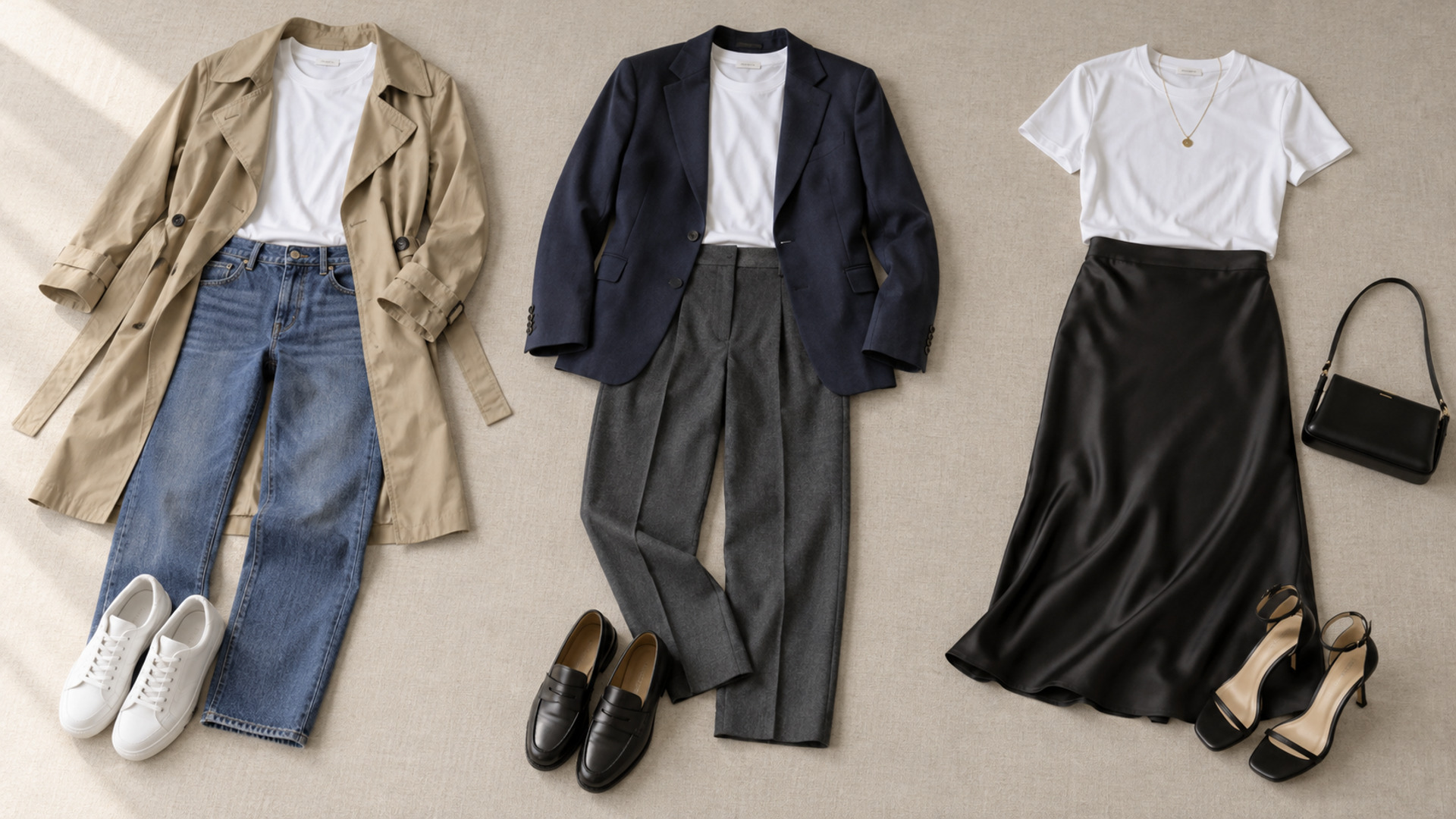
- Workday: White T-shirt + pleated wool trousers + navy blazer + black loafers. Try this where your dress code allows a T-shirt; a white Oxford shirt is an easy swap if it does not.
- Weekend: White T-shirt + straight jeans + open trench + white sneakers. Adjust the layer for the weather.
- Evening: White T-shirt + black satin midi skirt + comfortable pumps or dressy sandals + a simple gold necklace. The contrast between matte cotton and fluid satin changes the outfit’s mood.
Keep the tee’s fit and color consistent to see what the other pieces change. For more combinations based on line and layering, read How to Match Clothes.
Frequently Asked Questions
Should I buy all 25 essentials at once?
No. Start by checking what you own, then fill gaps gradually over a year or two if that pace suits your budget. Prioritize the categories you wear most—perhaps everyday shoes, jeans, or a coat—and skip pieces your routine never calls for.
Can wardrobe essentials have color?
Yes. Navy, camel, black, ivory, and olive are one easy foundation, but deep green or burgundy may act as your personal neutral if it works with the clothes you own. Compare real garments in daylight. A planned wardrobe color palette guide will go deeper; the current clothing color combinations guide offers pairings to try now.
How do I care for essentials to make them last five years or longer?
No care routine can guarantee a five-year lifespan. Follow each garment’s care label; wash a knit at 86°F/30°C only if its label permits it. Fold sweaters to reduce stretching, use hangers that support jacket shoulders, and let shoes dry between wears. Repair a loose button or small seam opening before it grows.
Related Wardrobe Guides
Use How to Build a Capsule Wardrobe to turn your favorite staples into a seasonal rotation. For colors, see the clothing color combinations guide and the planned wardrobe color palette guide. For silhouettes and layers, continue with How to Match Clothes. The Outfit Test preview describes the planned photo-and-questionnaire experience if you want a future personal starting point.