To match clothes, start with three decisions: where the outfit changes direction, how the garments share volume, and what each layer adds. A shorter visible top with a longer uninterrupted trouser line creates one silhouette; an untucked shirt creates another. Pair a roomy piece with a closer-fitting one if you want contrast, then add a useful outer layer. These are options to test in the mirror, not rules about your body.
A quick styling check: Put on a top and bottom you already own. Try the top untucked, partly tucked, and fully tucked. Step back and compare the lines. Then add one layer that changes the texture or outline without limiting how you move.
The Golden Rule of Silhouette: The Rule of Thirds
The rule of thirds is a visual shortcut for placing a horizontal break roughly one-third or two-thirds of the way down an outfit, instead of at its midpoint. A shirt ending at mid-thigh over trousers makes a longer upper section. Tucking that same shirt reveals the waistband and gives the trouser line more visible length. Neither arrangement is inherently better; choose the line you want for this outfit. Who What Wear’s styling example also shows how a cropped top, high waistband, or belt can create a thirds-based division.
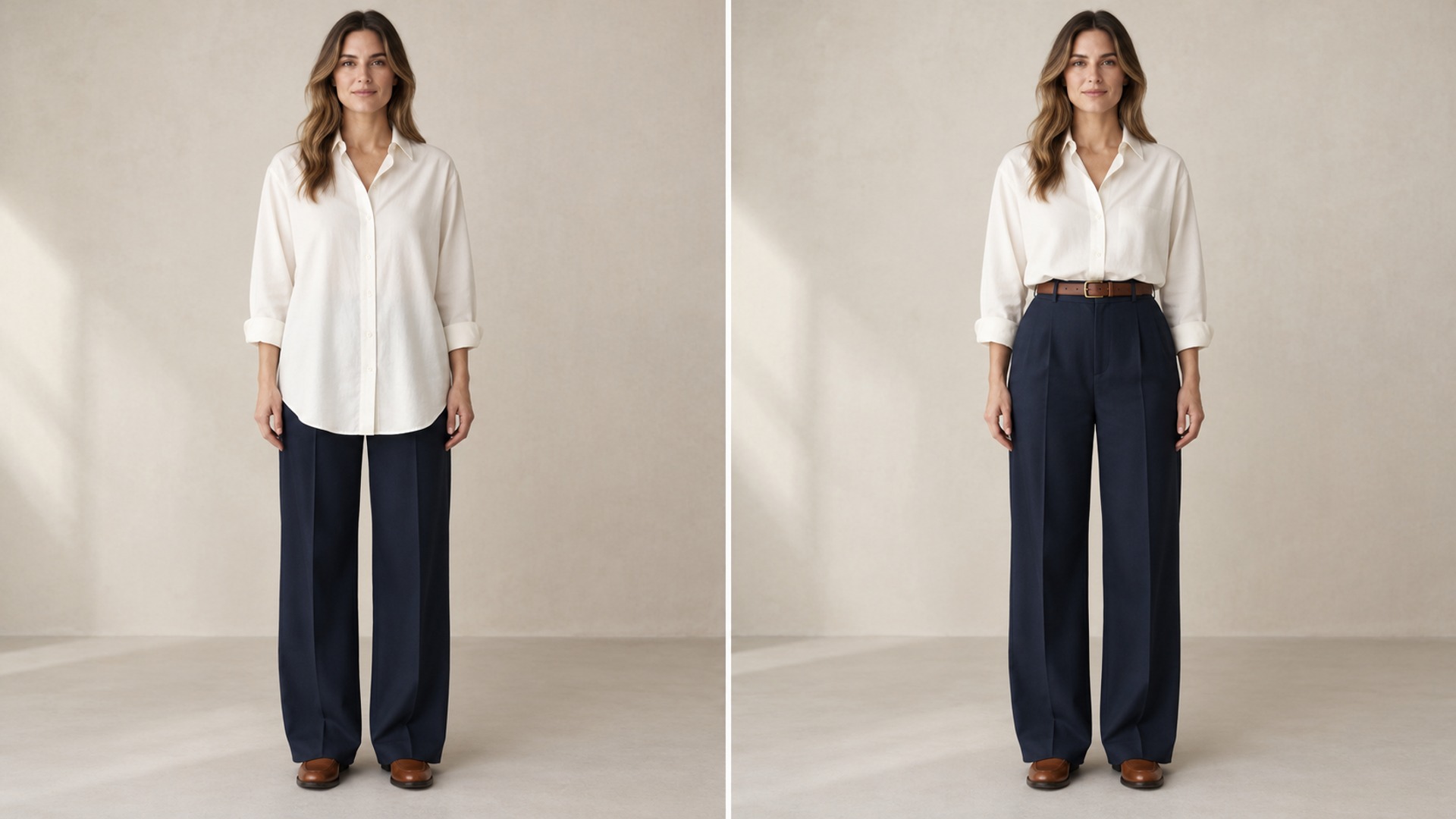
Try a full tuck when you want a clearly defined waistband, or a French tuck when you want to keep some ease at the sides. A mid-rise or high-rise trouser can help set the break, but the actual rise and shirt length matter more than their labels. A belt marks the same line more strongly. Leave the top loose if you prefer its drape, want extra room, or like the longer upper section. Check the result standing and moving, not only in a still photo.
The Law of Volume Contrast: Balancing Tight and Loose
Volume is the space a garment creates around you. Contrast makes the outline easier to read: a roomy knit over a straighter lower half, or a closer-fitting top above wide trousers. Two loose pieces can also look deliberate when one has structure or a visible waistline; two fitted pieces can be comfortable when the fabric moves with you. Use the formulas below to compare effects, not to ban combinations.
Formula A: Relaxed Top + Fitted Bottom
Try a textured, roomy sweater with straight or tapered jeans. The sweater supplies movement and the narrower trouser leg gives it an edge to sit against. A pencil skirt can make a similar contrast if it suits your day. If the top covers most of the lower half, lift a small section at the front or roll a sleeve to show where one garment ends and the next begins.
Formula B: Fitted Top + Wide-Leg Bottom
Put a close-fitting knit or silk top with fluid wide-leg trousers or an A-line skirt. The upper piece keeps the waistline easy to see while the lower piece moves freely. A bodysuit is one way to keep the top smooth, but an ordinary tucked tee works too. Compare the outfit with the shoes you plan to wear: hem length changes how much of the trouser shape remains visible.
Formula C: The Structured Jacket Anchor
Add a blazer with a defined shoulder over a relaxed tee and jeans. The jacket creates a clearer outer outline while the base stays easy. Leave it open to show the inner proportions, or button it to emphasize the jacket’s shape. A softer, unstructured jacket gives a gentler result; choose according to comfort and occasion. Our planned guide to styling a blazer will explore that piece in more detail.
The Three-Piece Layering Formula
Another useful outfit formula is top + bottom + third piece. Start with a tee and trousers, then add a cardigan, blazer, trench, or jacket for a different outline and texture. The third piece is optional when the weather or setting calls for fewer clothes. For colder days, think about physical layers as well: a thin base, a comfortable middle layer, and an outer piece with enough room for both.
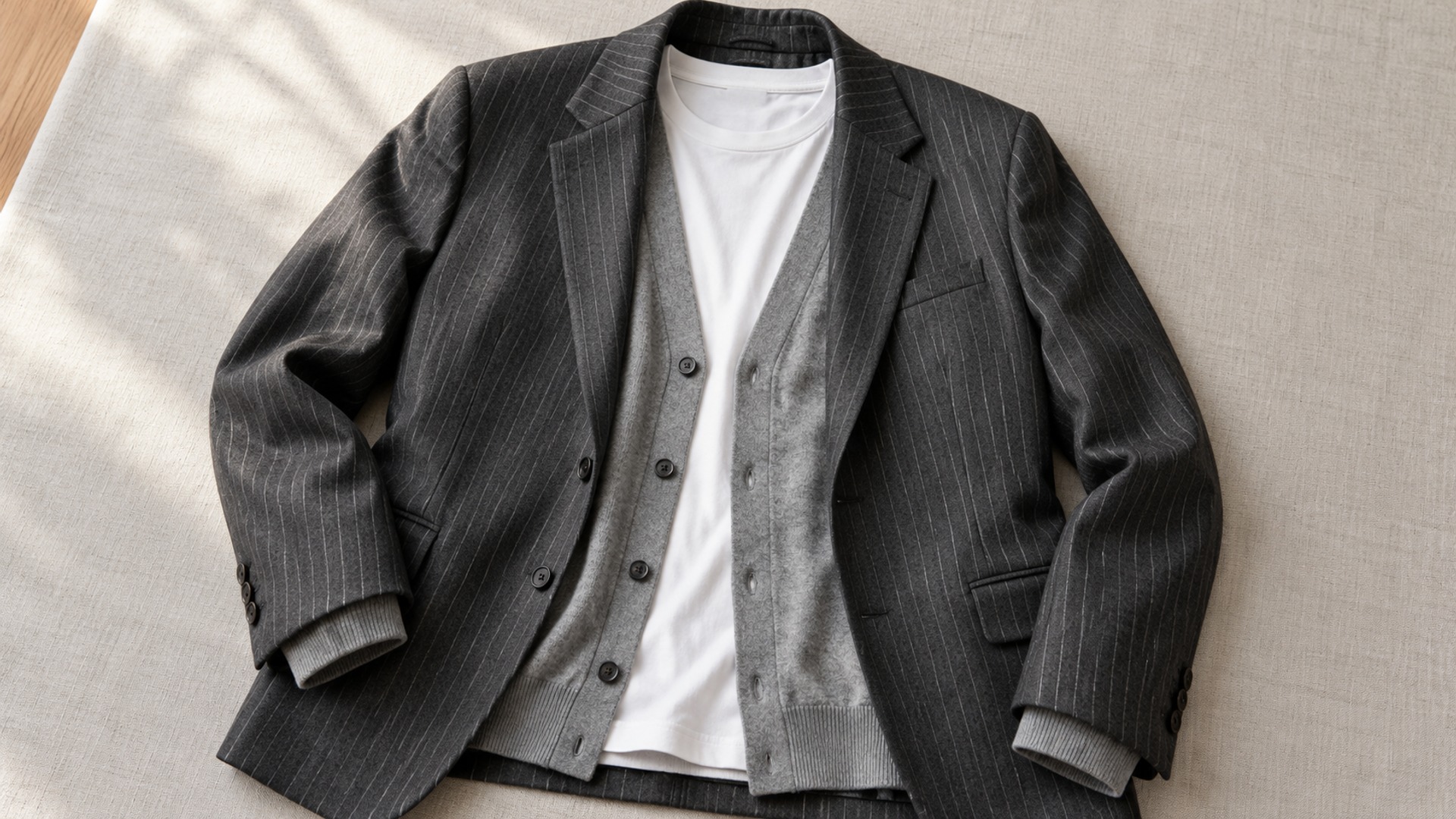
The tee, fine-gauge cardigan, and structured blazer above show one way to build from lighter to heavier fabric. It works because the outer layers have room at the shoulders and sleeves and their openings reveal the layer beneath. A heavy knit under a narrow jacket can bunch; swap in a thinner knit or roomier outer layer if that happens. Check that you can sit, reach, and move comfortably. Fabric content alone does not determine warmth or comfort, so let the weather and the actual garments guide you.
Mixing Textures: Why Contrast Beats Matching
Texture can separate pieces even when their colors are close. Smooth cotton beside smooth cotton gives a quiet, continuous surface; denim beside silk or a chunky knit beside tailored wool creates a more noticeable change. Neither effect is compulsory. Use texture when you want depth without adding another color.
Swipe across the table to compare the texture pairs →
| Starting texture | Contrast to try | What changes visually |
|---|---|---|
| Dense denim | Smooth silk or satin | A matte, sturdy surface sits beside a softer sheen. |
| Cable knit | Smooth leather or tailored wool | Raised stitches meet a cleaner, flatter surface. |
| Crisp linen | Fine cotton knit | A structured crease meets a softer drape. |
Try the pieces together in the light where you will wear them. Sheen and weave can change how a color appears, so look at the actual garments before deciding that two items match. If you need color combinations, the separate guide to matching clothing colors covers that decision.
Shoes and Accessories: Anchoring the Outfit
Shoes can repeat the outfit’s mood or shift it. Loafers give a simple dress a more tailored edge; sturdy boots make it feel grounded; sneakers keep it casual. Stylist Allison Bornstein’s Wrong Shoe Theory invites you to try a less expected pair and see whether the contrast feels more like you. You can keep the obvious pair when it serves the occasion and your feet better.
A belt makes the waistband more visible and can connect the shirt, trousers, and shoes through a repeated material or color. A narrow belt is a small accent; a wide one draws more attention to the middle of the outfit. If the waistband already gives you the line you want, skip the belt. Accessories should help the outfit and your day, not become a required final step.
Frequently Asked Questions
What should I do if my outfit feels boring?
Change one thing before replacing the whole outfit. Try a tuck to shift the horizontal line, add a jacket for a new outline, or swap a smooth piece for a textured one. Step back and keep the version you enjoy wearing.
How do I match patterned clothes?
Pick one color from the print for a solid companion piece, or try two prints with different scales, such as a fine stripe beside a larger check. Repeat one color across them if you want a clear connection. You can also keep both prints bold if that is your preference; compare them together rather than judging each item alone.
Does clothing matching depend on body shape?
These silhouette ideas describe garment lines, not body categories. Any person can compare an untucked top with a tuck, a wide bottom with a close top, or a soft layer with a structured one. The useful choice depends on comfort, movement, the garments’ actual cut, and the effect you prefer.
Deepen Your Styling Knowledge
Start with one pair of clothes you already wear and test two proportions, then one extra layer. Save a photo of the combination that works for your day. For another part of the outfit, explore clothing color combinations. Guides to styling blazers and jeans are planned. The Outfit Test preview explains the photo-and-questionnaire recommendation experience being developed; the formulas above are ready to use now.