Your personal style may already be visible in the clothes you reach for again and again. To define it, study your favorite pieces, name the feeling you want, and build outfit formulas for the life you actually live. You can start with your own closet; there is no need to buy a new wardrobe or commit to one aesthetic label.
A starting point: Your repeat-wear pieces reveal practical preferences. Three style words give those preferences direction. Your daily routine tells you which ideas are worth keeping.
The Three-Word Method: Clarifying Your Style Identity
Stylist Allison Bornstein’s Three-Word Method, also described in her book Wear It Well, offers a compact way to define personal style. Use three words as a flexible editing tool, not a rule that every garment must satisfy. Here is one practical way to work through them:
- What you wear: Choose a word grounded in clothes you already use, such as classic, minimal, tailored, or casual.
- How you want to feel: Add an emotional or sensory word, such as relaxed, cozy, polished, or understated.
- Where you want to go: Choose a word that adds a little contrast or aspiration, such as edgy, romantic, eclectic, or architectural.
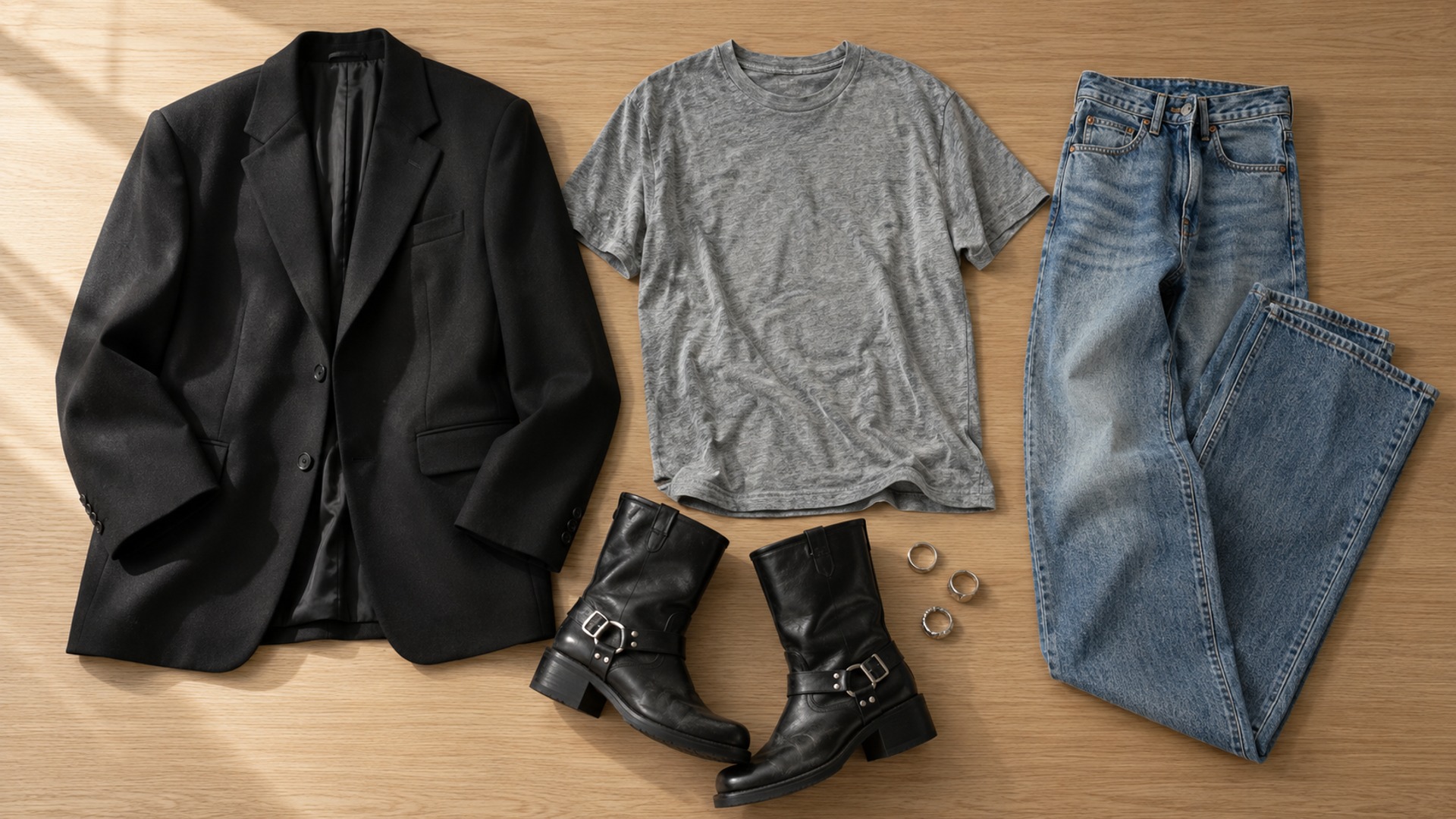
For example, Classic + Relaxed + Edgy could become a black tailored blazer over a soft gray tee, with faded straight jeans and sturdy leather boots. The blazer supplies structure; the tee and denim loosen the mood; the boots give the outfit a sharper finish. A different shoe could shift the same base toward another setting. Your words help you select outfit combinations, but comfort and context still decide what you wear.
Step 1: The “Top 5 Pieces” Closet Audit
Take out the five garments you wore most often over the past three months, leaving aside clothes you wear only at home. If the season has changed, use the most recent comparable season. Include shoes or an accessory if one is central to several outfits. These are your starting data, not a verdict on what you are allowed to wear.
Lay the pieces together and ask: What repeats? Look at color depth, fabric texture, shape, how closely each piece fits, and how easily you move in it. Perhaps three of your favorites have relaxed shoulders, or you repeatedly choose navy against ivory. Then name one thing you enjoy about wearing each piece. “Easy to walk in” is as useful an observation as “looks polished.”
Write down two or three patterns. Those patterns describe your current styling preferences more reliably than a saved image you have never tried. If a favorite item does not fit a pattern, keep it in the picture: personal style can contain contrast.
Step 2: The Lifestyle Reality Check
An appealing closet can still be hard to use if most of it suits an imagined schedule. Think of formal shoes waiting for events that rarely happen while your everyday walking shoes have no outfits built around them. Count the hours you spend dressed for each kind of activity in a typical week, then compare that time with the outfits you can actually assemble. Your wardrobe does not need exact percentages; the exercise simply reveals gaps.
| Your week | Example share of dressed time | Useful outfit question |
|---|---|---|
| Work or study | 50% | Do your layers and shoes suit the setting and commute? |
| Errands, walking, and family time | 30% | Can you move comfortably and adapt to the weather? |
| Social plans | 20% | Do you have an outfit you enjoy for the events you attend? |
This 50/30/20 example is a planning sketch, not a recommended wardrobe ratio. Your own mix may look nothing like it. If most of your time is spent working from home, plan for the clothes you want to wear there. If your week includes uniforms, caregiving, religious dress, or frequent changes in climate, record those needs first. Your lifestyle is a design input, not a restriction on your taste.
Step 3: Define Your Daily Uniform
A daily uniform is a repeatable outfit formula, not an identical outfit every day. It reduces morning decisions by giving you a reliable starting shape, while colors, fabrics, footwear, and accessories can change. The formula should feel good in motion and work for a real part of your week.
Building Your Go-To Formula
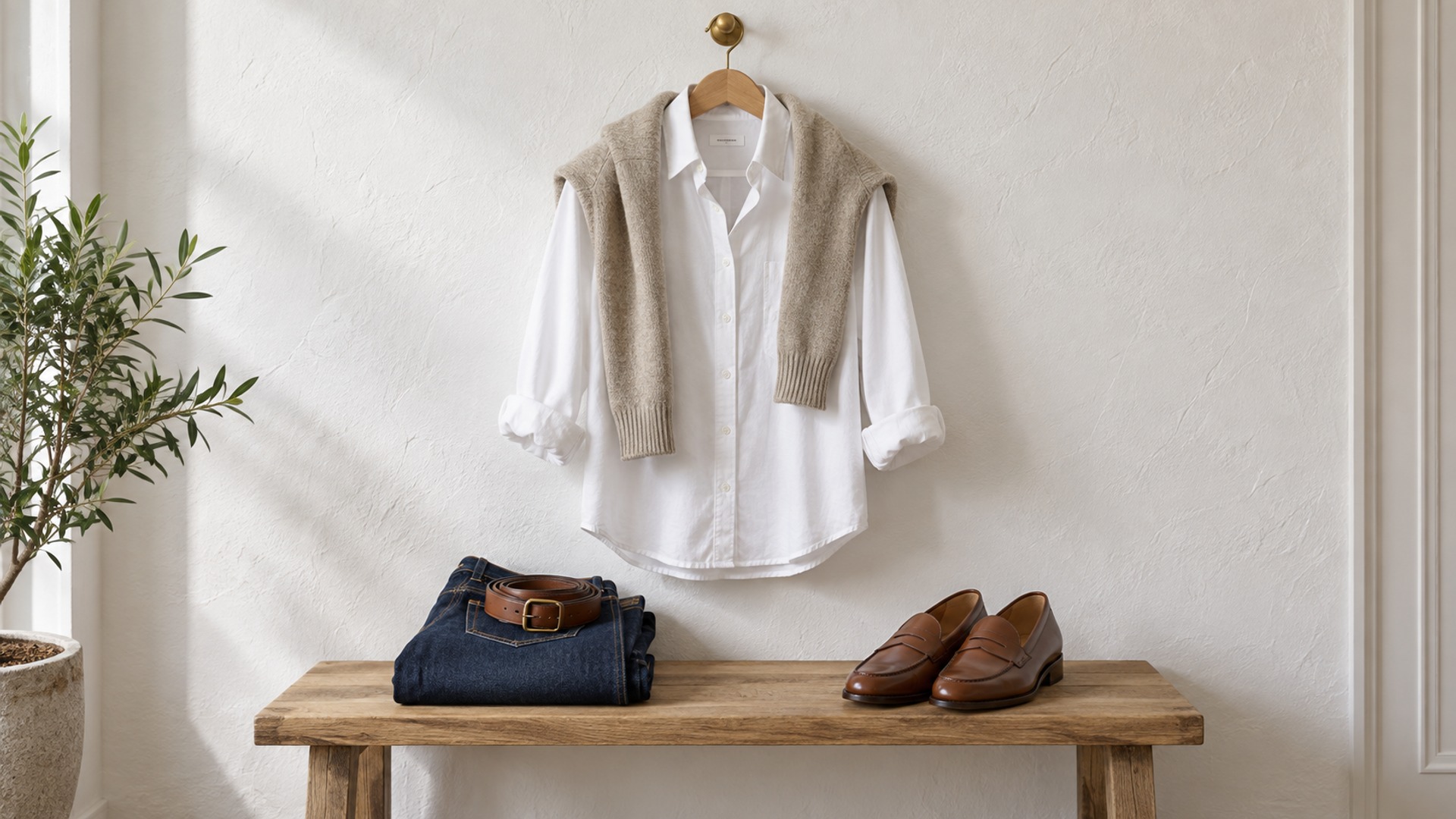
Try a formula from pieces you already own. One option is straight-leg denim + oversized white shirt + leather loafers + statement earrings. Another is knit midi dress + structured jacket + ankle boots. Neither is a required uniform; swap the garment categories to suit your comfort, climate, dress code, and preferences.
Now build three variations. Keep the main silhouette, then change one element: a heavier shirt for cool weather, a sneaker for a longer walk, or a small piece of jewelry for dinner. Photograph the combinations or write them down. If a formula only works when you buy several new items, start again with the pieces from your closet audit.
Step 4: Create a Focused Moodboard (Without Trend Overwhelm)
Collect outfit references you could plausibly wear on an ordinary Tuesday. Save the specific detail you want to try: a shirt tucked loosely, a dark shoe under light trousers, or a soft knit over a crisp collar. A beautiful image is less helpful when its setting, weather, or garments have nothing in common with your days.
Keep a focused board of roughly 20 to 30 references, then look for repetition. Do several images share the same proportions, colors, or textures? Compare those patterns with your three words and top five pieces. Test one detail at a time using clothes you own. Delete references you no longer want to dress like; your board should be a working tool, not a permanent identity.
Frequently Asked Questions
Can my personal style change over time?
Yes. A different job, climate, schedule, or preference can change which clothes are useful and enjoyable. Revisit your closet audit and adjust your three words when the old ones stop helping. Changing the third word can be an easy way to explore a new direction while keeping familiar pieces.
How do I stop buying clothes I never wear?
Before buying, ask whether the piece supports at least two of your three style words and works with three things you already own. Then check the practical details: movement, care, weather, and when you would wear it. This is a pause for reflection, not a rule against choosing something unexpected.
What is the difference between personal style and fashion trends?
A trend is a circulating fashion idea; personal style is your filter for deciding which ideas suit your taste and daily life. You can enjoy a trend, skip it, or adapt one detail without replacing your wardrobe.
Next Steps on Your Style Journey
Use how to match clothing colors to test pairings from your closet, or build a capsule wardrobe around the pieces you keep repeating. The personalized outfit test preview shows how a future photo and short questionnaire are planned to inform clothing and outfit suggestions. You can use the four steps above today while that service is being developed.